
The UI/UX landscape is constantly evolving, and 2026 promises a new wave of trends for SaaS. AI, personalization, and the journey-centric approach will be at the heart of tomorrow's interfaces. But how can you adapt your SaaS to these new expectations and avoid falling into the trap of fleeting fads? This article deciphers the major trends for 2026 and gives you the keys to successful integration for an optimal user experience.
Table of contents
- 1. The Era of Invisible AI and Agentic AI
- 2. AI Fatigue: The Luxury of Human Simplicity
- 3. Uncompromising Inclusion and Design for Neurodiversity
- 4. Digital Sobriety: Efficiency as an Ethic of the Essential
- 5. The 2.5D: Physicality and Reassurance in Spatial Design
- 6. Contextual Hyper-Personalization via Generative UI
- 7. Micro-interactions: The Silent Dialogue and Organic Feedback
- 8. UX as a Strategic Growth Lever (ROI)
- Conclusion: Humans Take Back Control
1. The Era of Invisible AI and Agentic AI
The first major shift of 2026 is the disappearance of AI as a spectacle. We are no longer selling "integrated AI"; we are selling software that solves problems without showing the gears turning. We are leaving the era of software-as-a-tool to enter the era of agents. According to the latest Gartner report on strategic technology trends, Agentic AI tops the global priority list. Until now, the user had to manipulate every command. In 2026, they set goals and supervise execution.
Understanding the Technological Rupture of Agency
To truly grasp the stakes, we must distinguish Generative AI from Agentic AI. Where the former produces content (text, image, code) in response to a prompt, the latter produces actual work. An agent doesn’t just predict the next word; it uses an iterative reasoning cycle to achieve a goal. It observes its environment, plans steps, uses third-party tools (APIs, internal navigation), and evaluates its own results to correct its trajectory. This autonomy changes the very nature of interaction: we are moving from an interface of procedure ("how to do it") to an interface of intention ("what to get").
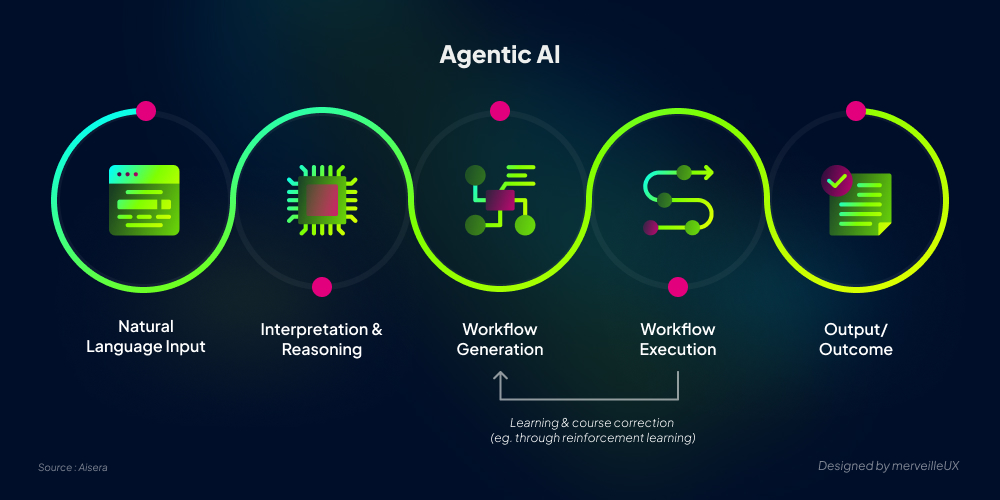
The designer's role shifts dimensions. It’s no longer about drawing form fields or unit validation buttons, but about designing interfaces of orchestration. The interface becomes a supervision dashboard where the user visualizes agent progress, adjusts priorities, and intervenes only on complex friction points. This approach requires a global rethink of your AI integration strategies for SaaS to move from a passive tool to an active partner.
The UX of Trust: Sandbox and Human-in-the-loop
The major challenge isn't the algorithm's performance, but the interface's ability to reassure. For a user to delegate a critical task, they must have total visibility into the machine's intent. Passive chatbots waiting for a question are now obsolete.
-
The Sandbox Mode: Before executing a heavy action, the agent presents a clear preview. The user sees the result before it becomes effective.
-
Human-in-the-loop: AI does not decide tipping points alone. The design integrates validation gates where human expertise is solicited.
The MerveilleUX Tip: Automation cannot save a poorly designed user journey. Before integrating agents, ensure your basic flows are crystal clear. A solid UX strategy is the indispensable foundation for hosting credible autonomous agents.
2. AI Fatigue: The Luxury of Human Simplicity
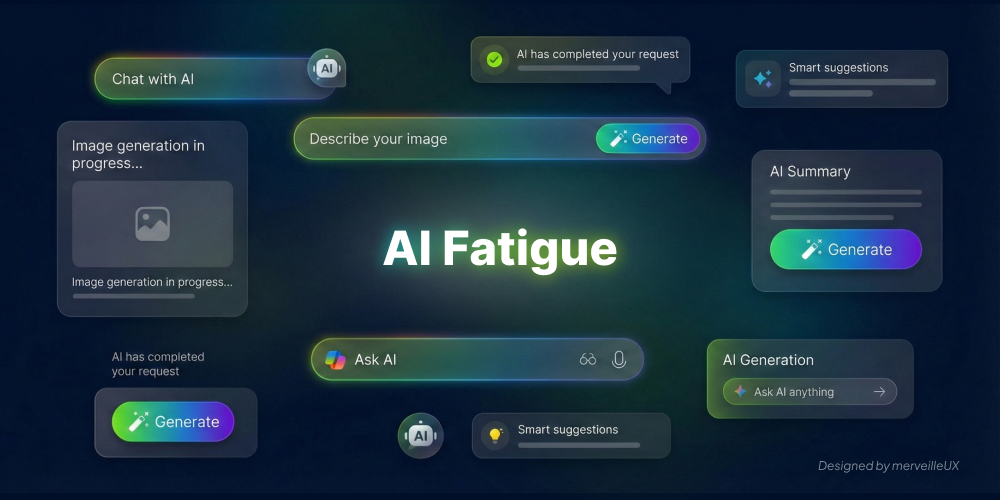
A growing portion of the population now suffers from AI fatigue. After three years of hype, many users are weary of intrusive chatbots and purportedly "smart" features that only complicate their daily work. The NN Group (Nielsen Norman Group) highlights in its analysis of the state of UX in 2026 that maturity will come through the drastic reduction of this unnecessary cognitive load.
Paying Off the AI UX Debt: From Tool to Result
Rejecting AI doesn't mean returning to pen and paper, but a vital need to return to the concrete. Users seek reliability, speed, and meaning. This requires paying off the AI UX debt, accumulated when companies grafted generative features onto existing interfaces without real ergonomic thought. In 2026, the goal is to mask the technology behind pure usage. We move from a command interface to a result interface, where AI anticipates the need and directly proposes the finished solution.
The Design of Certainty: Intention-Based Interfaces
The future of SaaS UX relies on understanding intention. The user of 2026 does not want to learn how to prompt. They expect the software to understand the context of their task. Offering a simple, predictive interface devoid of technical jargon has become a major selling point. We are no longer selling artificial intelligence; we are selling available brain time. It’s a matter of respecting the user's time.
3. Uncompromising Inclusion and Design for Neurodiversity
Digital accessibility is no longer limited to screen readers. In 2026, the true societal and business stake is neuro-inclusion. With the full entry into force of the European Accessibility Act (EAA), design must adapt to all cognitive profiles: ADHD, dyslexia, autism, or states of intense fatigue. An inclusive SaaS is a SaaS that does not discriminate based on attention span. This approach is part of a broader vision of ethical design, where the creator's responsibility is to protect the mental integrity of their users.
Calm Design at the Service of Global Productivity
A professional SaaS interface too often looks like an airplane cockpit in permanent alert. The trend is toward Calm Design:
-
Reducing Mental Load: Hiding everything non-essential by default.
-
Native Focus Mode: Allowing a workspace to be isolated with a single click.
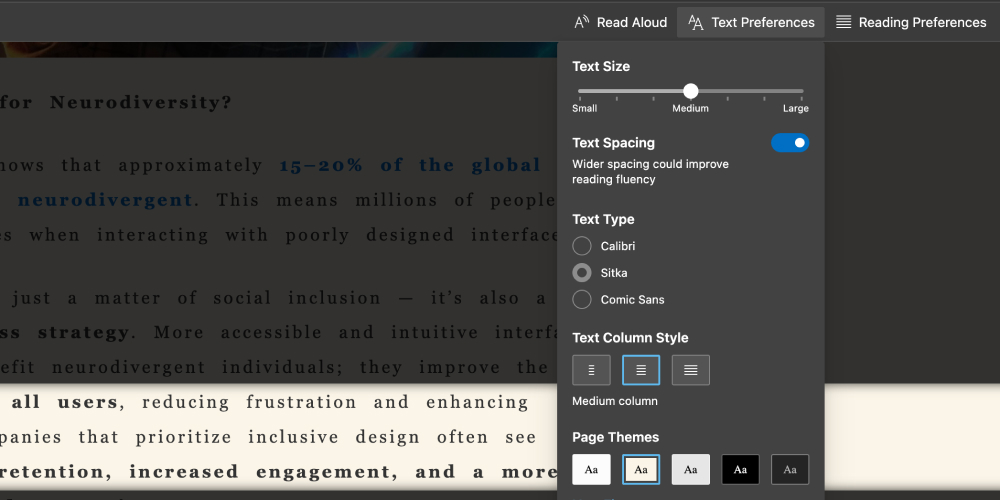
- Adaptive typography: providing accessible reading options (spacing, weight, specific fonts) that adjust without breaking the page layout.
4. Digital Sobriety: Efficiency as an Ethic of the Essential
In 2026, Green UX is no longer a simple marketing option, but a global design philosophy. Faced with the energy consumed by new computing models, every other aspect of the software must tend toward absolute sobriety. The goal is to eliminate everything superfluous, as digital waste has become unacceptable. The W3C has reinforced this movement with the publication of the Web Sustainability Guidelines (WSG) 1.0, setting a rigorous technical framework for reducing the carbon footprint of interfaces.
Fighting Software Obesity (Bloatware)
A high-performing SaaS in 2026 is a SaaS that refuses digital fat.
-
The Aesthetic of Lightness: We replace heavy images with SVG animations and pure CSS code. It’s faster, cleaner, and easier to maintain.
-
Journey Optimization (Zero-Waste UX): The less time a user spends searching for information, the fewer server resources they solicit. Efficiency becomes the number one ecological indicator. In this context, optimized navigation is key to reducing useless requests while smoothing the experience.
-
Performance as a Pillar of Trust: A SaaS that loads instantly is a SaaS that respects its user. Avoiding fatal UX navigation mistakes is the baseline of this responsible approach.
5. The 2.5D: Physicality and Reassurance in Spatial Design
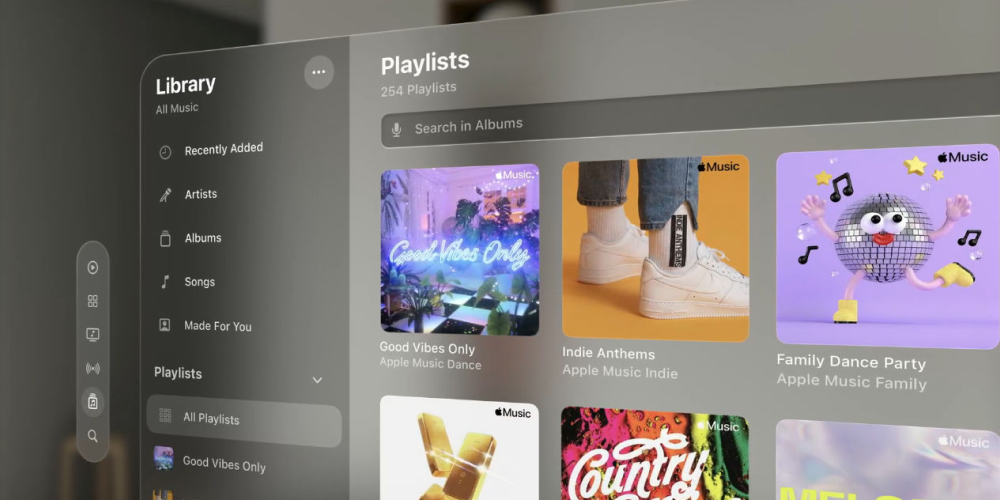
Influenced by spatial computing, the Web is regaining depth with 2.5D. The idea is to reintroduce physical cues to guide the user. By relying on the principles of Gestalt psychology, designers use proximity and continuity to create intuitive affordance: the user immediately understands how to interact with an element thanks to its relief and position in space.
Beyond Hierarchy: Affordance and Physicality
While 2.5D effectively helps prioritize information, it answers much more critical needs:
-
Tactile Affordance: In a world where we interact increasingly by gesture or gaze, shadows and reliefs indicate to the brain what is clickable, movable, or "graspable." Flat design sorely lacks these cues.
-
Psychological Reassurance: AI makes the digital immaterial and sometimes unsettling. Reintroducing surface textures (glass, liquid, relief) anchors the tool in a familiar reality. It is a major trust factor: we "touch" the interface, we no longer just look at it.
-
The Bridge to Immersion: 2.5D prepares your SaaS interfaces to be consulted on varied devices. What is a drop shadow on a screen becomes a real distance in an AR headset.
Visual Noise and Accessibility: The Imperative of Universal Readability
A major vigilance point in 2026 concerns the readability of these multidimensional interfaces. The accumulation of layers, transparencies, and depth effects mechanically increases the risk of creating zones of visual confusion. This visual complexity must never sacrifice universal readability: shadow and transparency plays must respect strict contrast ratios to remain readable by everyone. To delve deeper into this crucial topic, check out our key tips for creating an accessible SaaS, because aesthetics must never override usability.
6. Contextual Hyper-Personalization via Generative UI
Thanks to technological advances, we are entering the era of Generative UI. As Google Research highlights, the interface is now built on demand. This trend toward interface personalization allows moving from a rigid model to a "liquid" experience that adapts to the preferences and habits of each user.

Moving from Static Models to On-Demand Interfaces
GenUI marks the end of "ready-to-wear" design. Until now, SaaS offered rigid dashboards or predefined templates. Now, the system interprets the user's intention to dynamically assemble a unique visual and interactive experience. It’s no longer just generated text, but interactive charts, specific forms, or collaboration tools that appear exactly when they are needed.
7. Micro-interactions: The Silent Dialogue and Organic Feedback
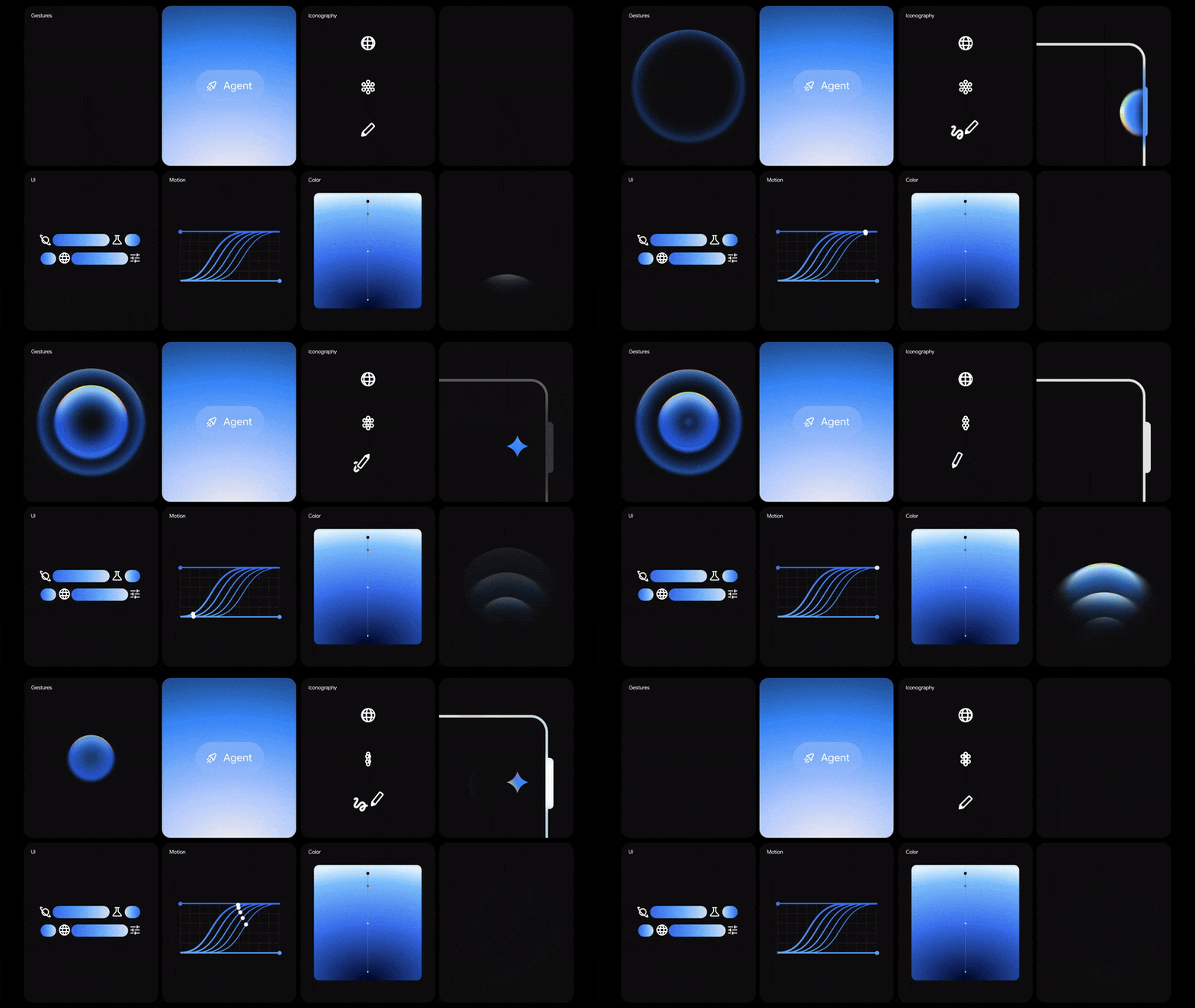
Micro-interactions are those tiny animation details that make all the difference between a functional tool and a product we love to use. In 2026, they play a crucial role in reassurance within increasingly sophisticated interfaces. Gone are the confetti and gadget badges: we are talking here about elegant functional feedback that humanizes digital exchange.
A successful micro-interaction is that little button that reacts flexibly to hover, that progress bar that "breathes," or that notification that fades away with a natural transition. In 2026, the standard evolves toward "living" feedback: fluid gradient animations and elastic shapes now signal deep processing tasks or complex system state changes. This organic movement isn't just aesthetic: it indicates that the software is in an active phase of reflection or processing, transforming a cold machine into an attentive collaborator.
8. UX as a Strategic Growth Lever (ROI)
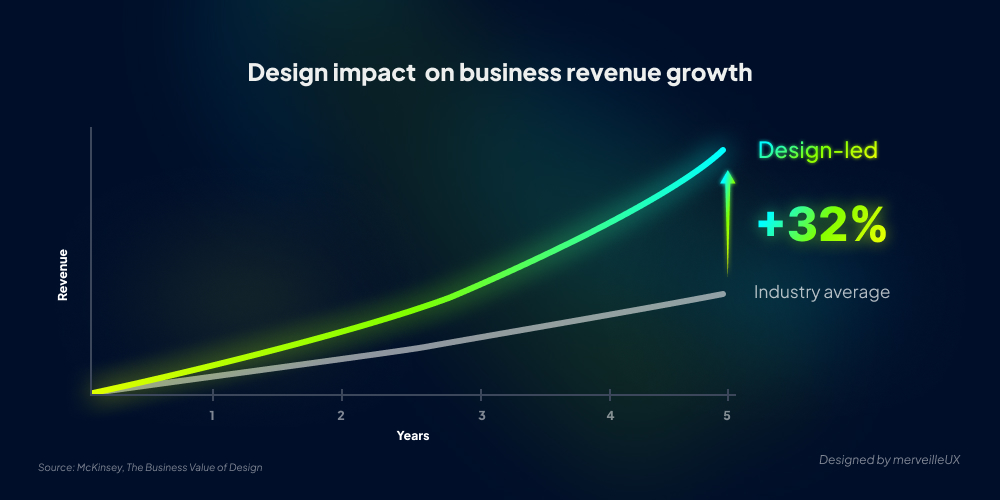
Design is now recognized as the main engine of a SaaS product's ROI. According to McKinsey & Company, design-led companies generate 32% higher revenues. This approach places user experience at the heart of the Product-Led Growth (PLG) strategy, where the intrinsic quality of the product becomes the main vector for acquisition and retention.
From Tactical Support to Competitive Advantage
In 2026, UX is no longer a "polish" phase at the end of a project, but the heart of commercial strategy. Market leaders have understood this: investing in a fluid and emotionally engaging experience drastically reduces Customer Acquisition Cost (CAC) and boosts Lifetime Value (LTV). Mastered UX transforms users into natural ambassadors of the product, activating powerful organic growth.
Conclusion: Humans Take Back Control
The UX trends of 2026 mark the end of wild experimentation to enter a phase of refinement and ethics. True innovation consists of knowing when to fade away to make room for pure utility.
Ready to prepare your SaaS for 2026? Start with a complete UX audit to transform your interface into a major competitive advantage. Let's discuss together to make your SaaS a marvelous experience.